View in a room
Share
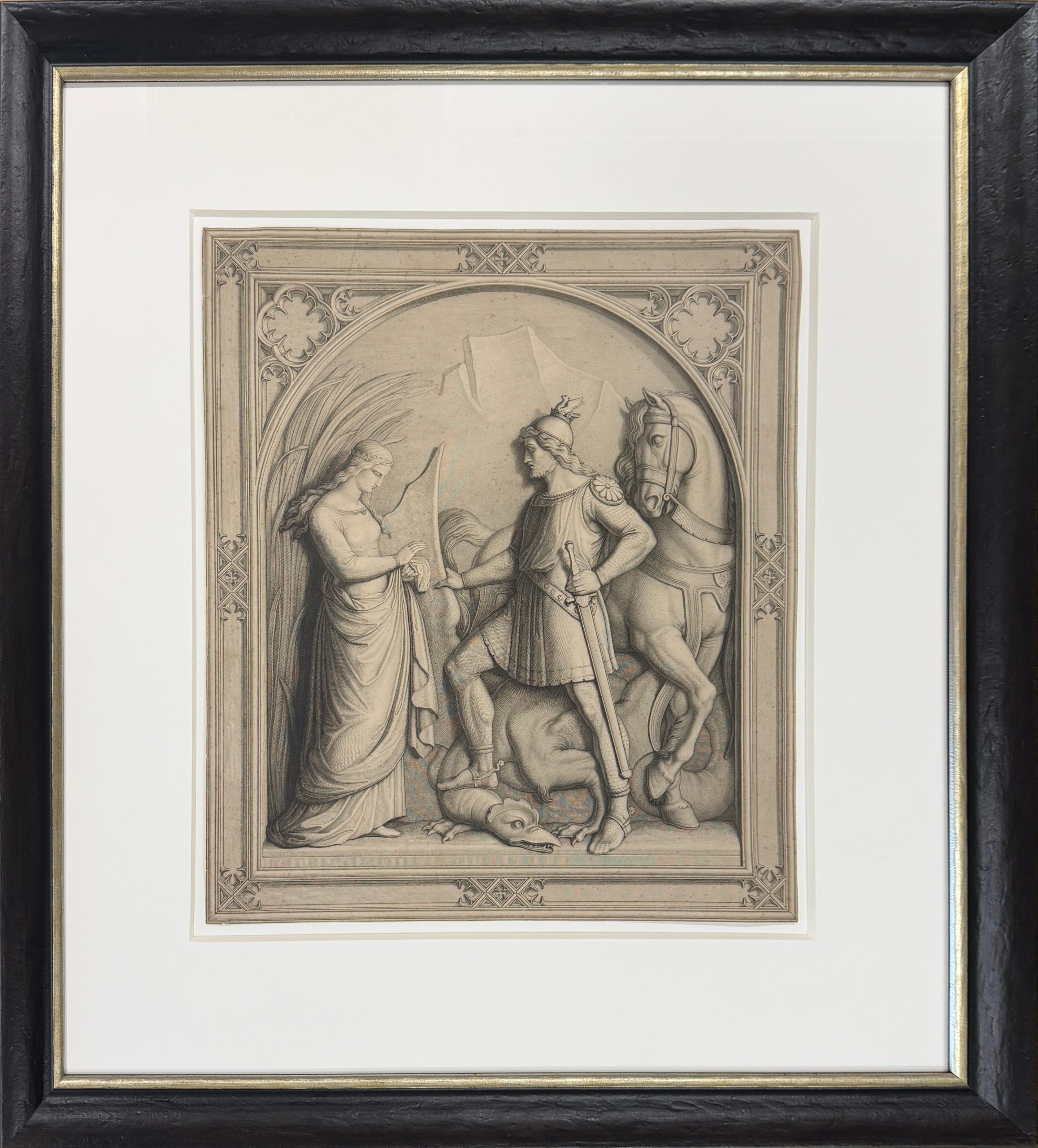
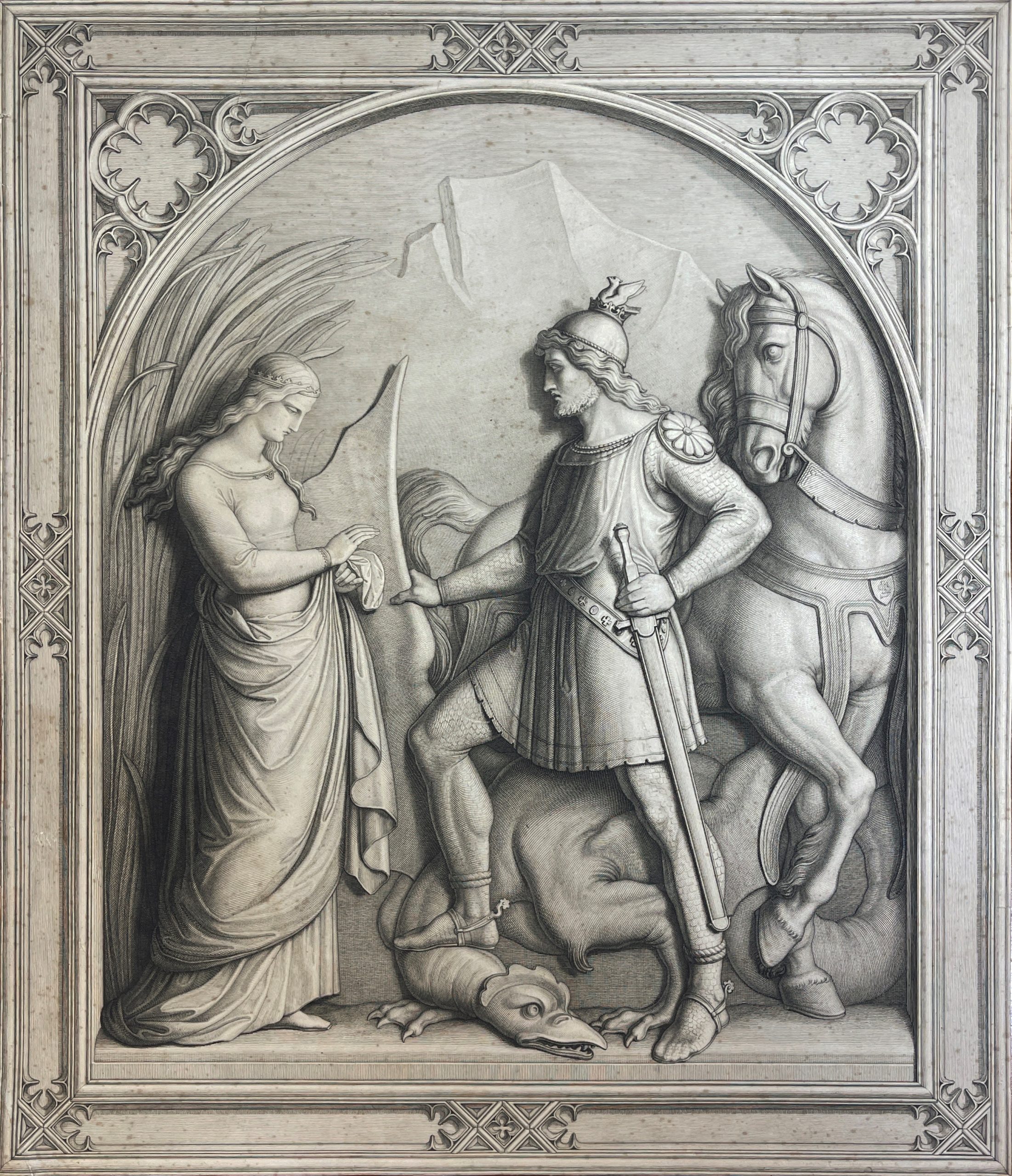
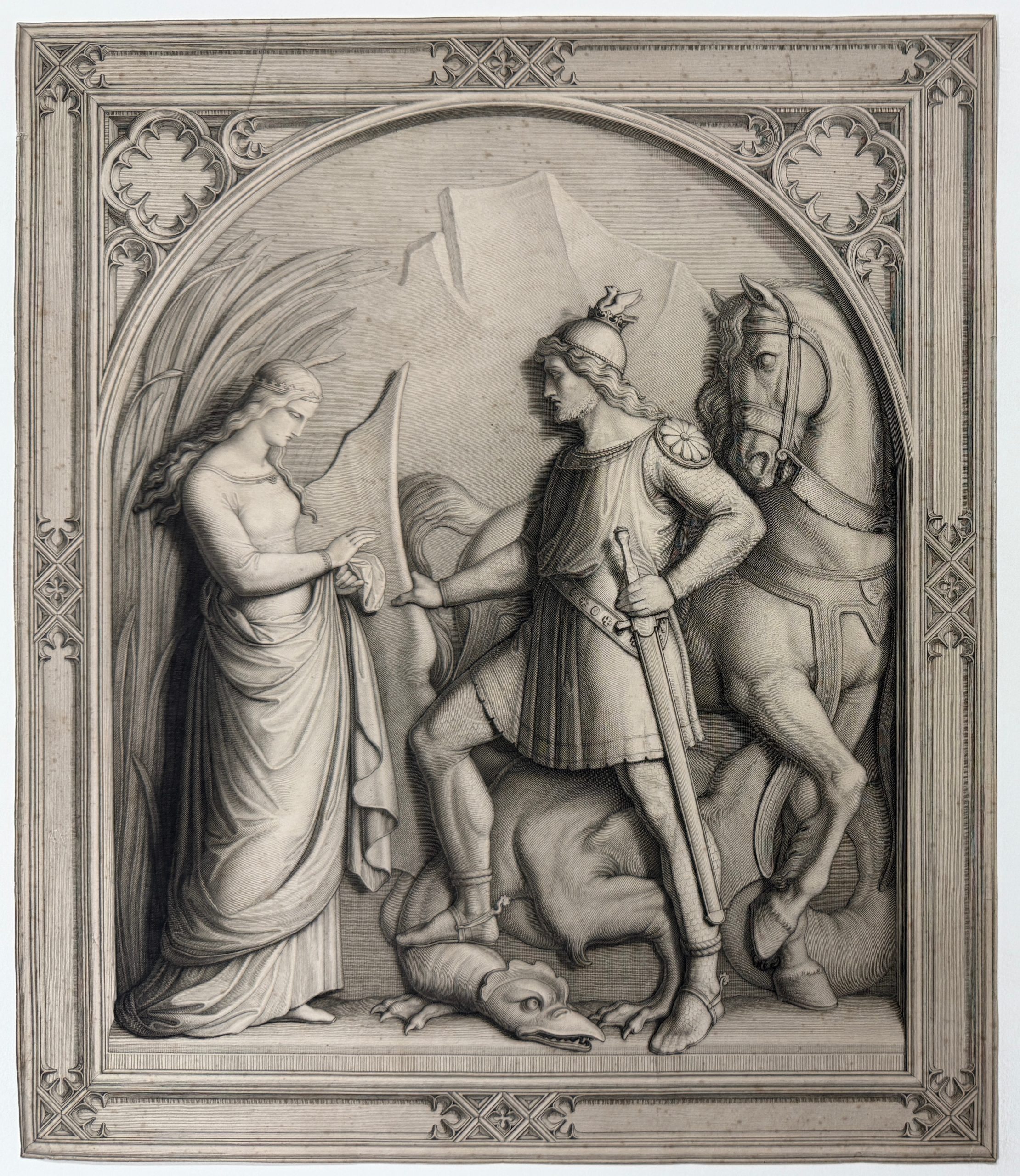
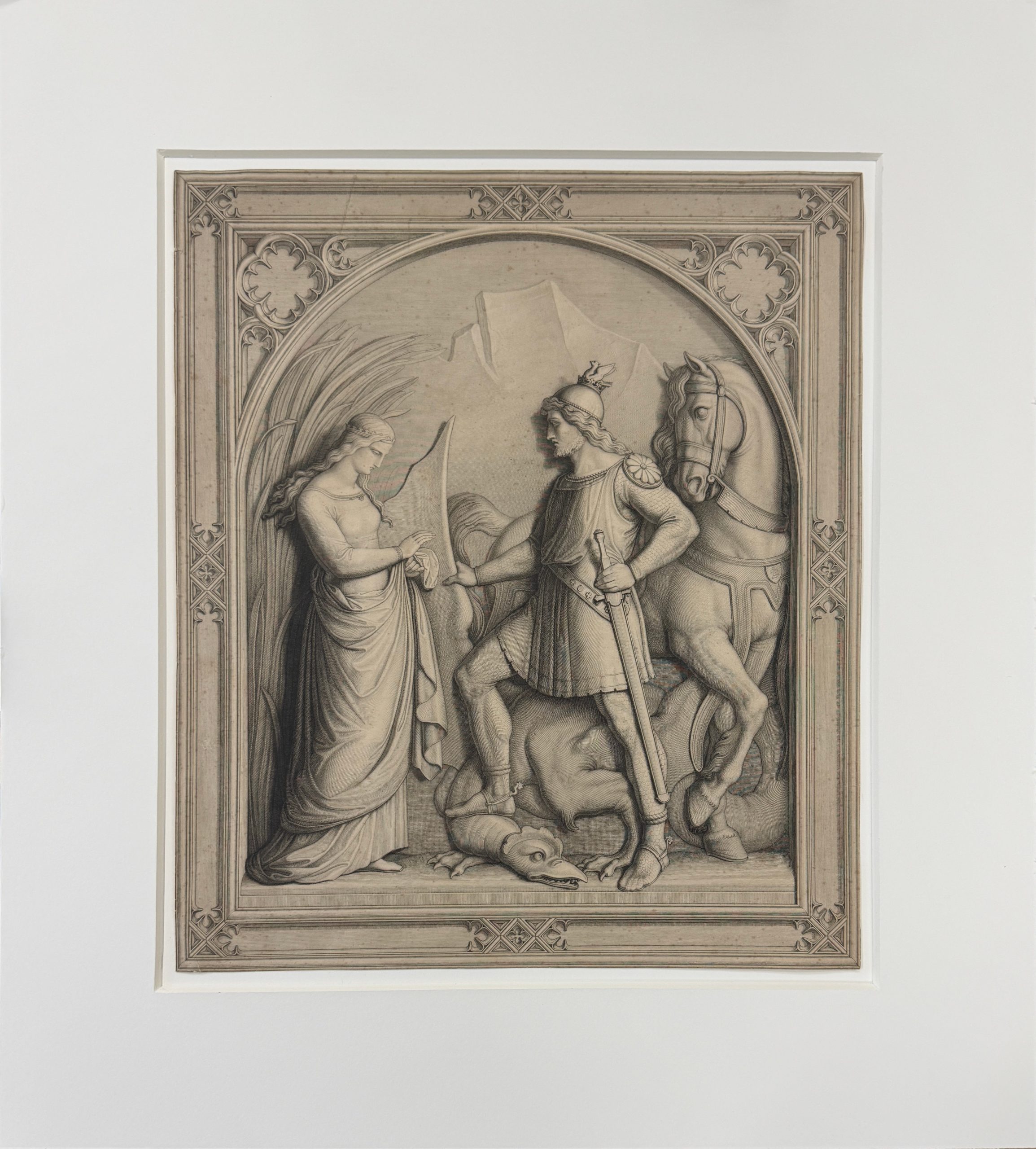
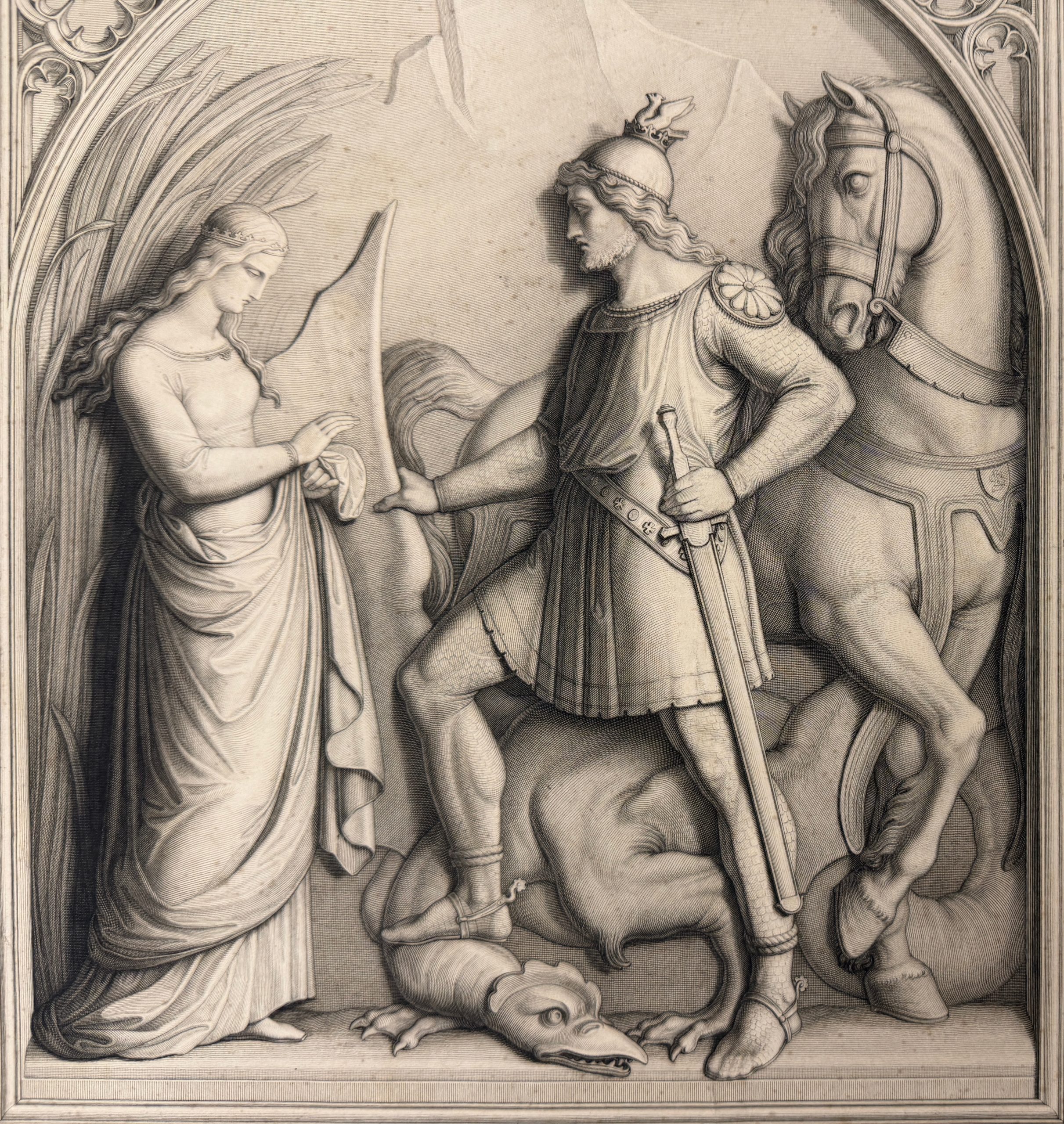
St George and the Dragon
Unframed size: Not available
$1,950.00
Taxes and shipping fees will apply upon checkout


View in a room
Share
Unframed size: Not available
Taxes and shipping fees will apply upon checkout
The image of St George killing the dragon is among the most common images of the saints, found in works of art, frescoes, icons, and other religious depictions dating back to the twelfth century.
George was a Roman soldier born in the late third century in Cappadocia and brought up as a Christian by his widowed mother in her hometown of Lydda, in Palestine. Christians came to be persecuted by the emperor Diocletian, and George, a Roman commander, was ordered to take part. He refused. Confessing his faith, George kept his resolve despite torture until, finally, he was beheaded.
The story of St George and the dragon derives from a posthumous appearance that George made to rescue a princess and a town from a dragon’s ravaging. Stories of this sort are common, meant to demonstrate saints as protectors of Christians struggling on Earth. The most common variant of the George story tells of a town near a lake in which a dragon lived. The dragon prevented the townspeople from drawing water and terrorized the town. The townspeople, pagans, believed that they could keep the town safe by offering young virgins chosen by lot as sacrifices to the monster.
There came a time when the king’s daughter chose the wrong straw and was sent to the lake. The dragon emerged from the pool, but before he could strike St George appeared on a radiant white horse, armed with spear, shield, and sword. Making the sign of the cross, St George pinned the dragon to the ground with his spear while his horse trampled it under its hooves. St George commanded the princess to bind the neck of the dragon with her belt and lead the beast back to the town. Once there, in front of the astonished citizens and the grateful king, St George dispatched the dragon with his sword. St. George’s miraculous intervention led to the conversion of the whole town to the Christian faith.
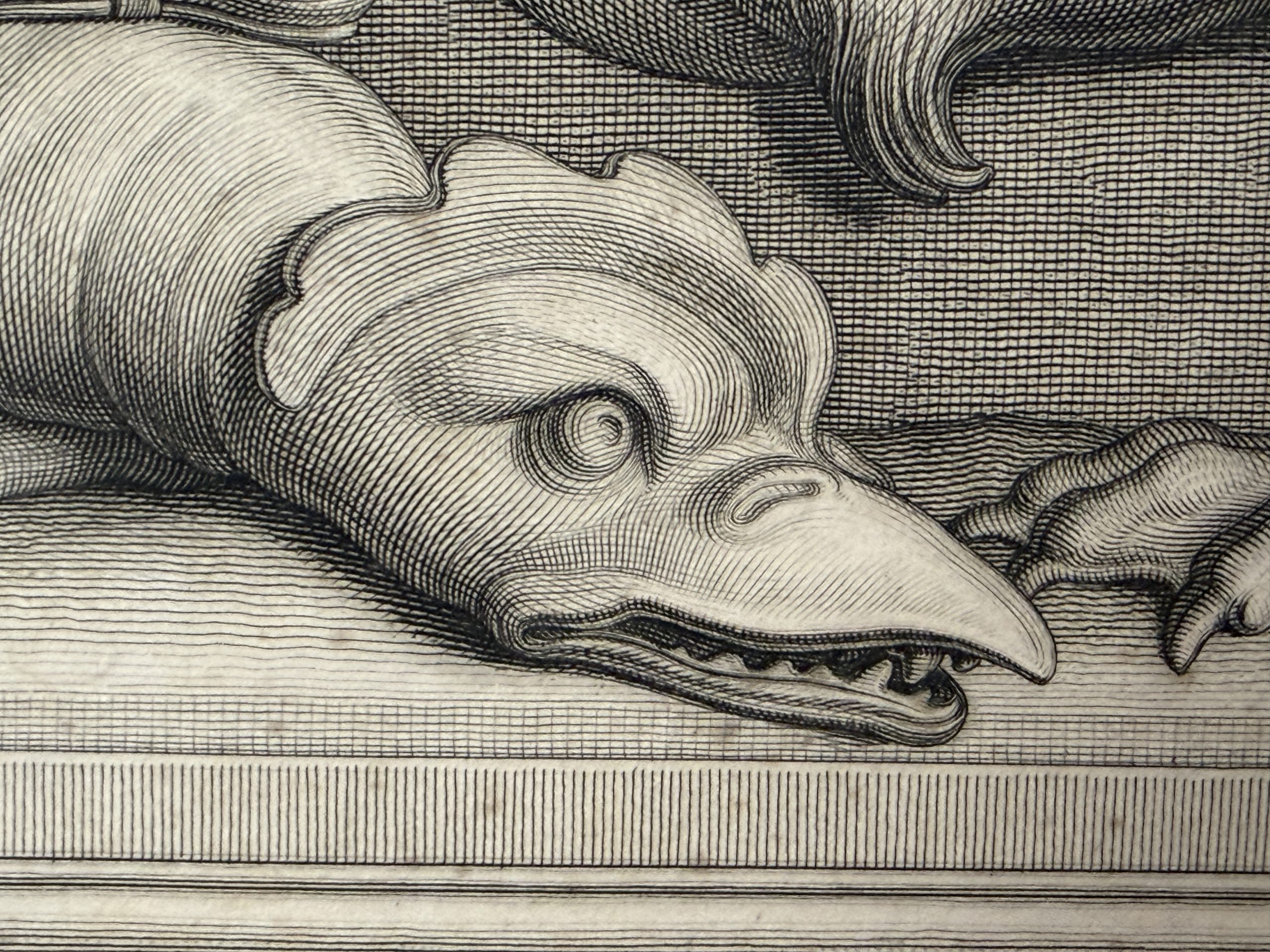
This depiction of St George reflects much of the iconography expected of images of St George. Almost all images of St George show him beardless (symbolic of his youth); in that regard, this picture departs from the norm. But he has the rows of curly brown hair that typify images of George and he is dressed as a soldier and riding a white horse. Here, his crown is not the diadem that he is ordinarily shown to wear (a reference to his “crown of martyrdom”), but a more militarized helmet. The dragon is seen to be alive, still, consistent with the story, and under the horse’s hooves.
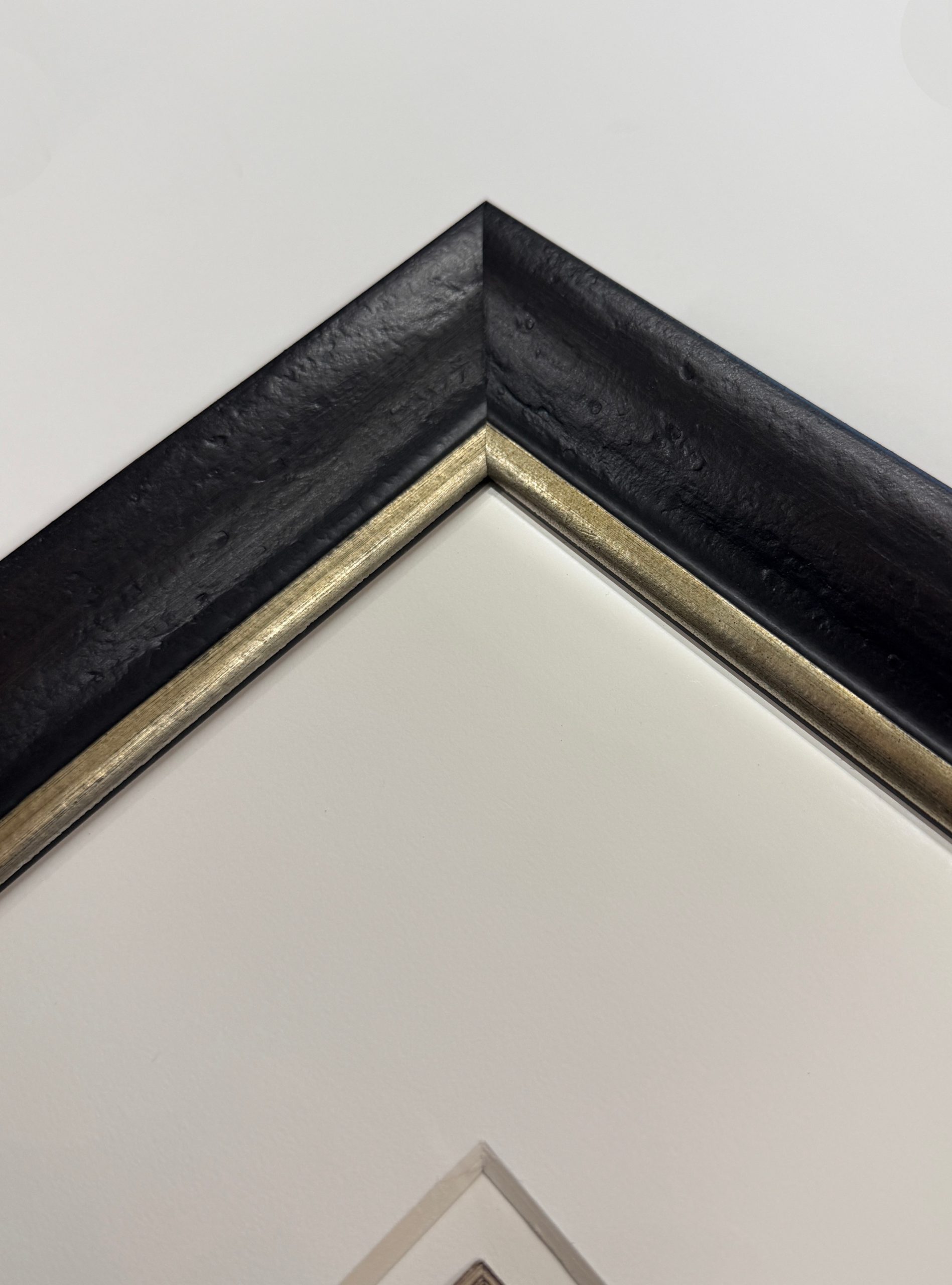
This work is masterfully created, with superb shading and physiognomy. It is printed on a very heavy wove paper of rag or linen. This work is unsigned and the paper bears no visible watermark or other identifying features. It is custom framed using strictly conservation-grade materials behind 99% UV-blocking art glass.
| Attributes | Value |
|---|---|
| Medium | Photograph, Print |
| Condition | Fine Condition |
| Signing, Dating, and Titling | |
| Framing | |
| Date |
Medium:
Silver Print with Paint
Date:
1992
Signature:
Hand-signed and dated by artist, in pencil, en recto lower right
Framing:
Custom-framed
Condition:
Fine condition
Frame Size:
30.5 in. (h) × 22.5 in. (w) × 1 in. (d)
Window Size:
21.75 in. (h) × 14.5 in. (w)

Original price was: $900.00.$500.00Current price is: $500.00.
$1,975.00
$300.00

Buy art, support creativity.

Guaranteed genuine artwork.

Free delivery on orders $99+.
Established in 2017, Washington Color Gallery
presents exceptional works by Washington artists
and renowned printmakers worldwide.




Company

Washington Color Gallery
7979 Old Georgetown Road, Suite 1100
Bethesda, MD 20814, United States